Maio Biodiversity Foundation: at the service of local people and nature.
Maio Biodiversity Foundation (FMB) is a conservation organisation on the island of Maio. It has been at the forefront of conservation efforts in Cabo Verde since its founding in 2010 by Professor Tamás Székely of the University of Bath. Now led by Maense director Janete Agues, FMB combines international expertise with local knowledge to safeguard Maio’s unique biodiversity and support its communities. Maio is home to well-preserved natural habitats and diverse landscapes, such as beautiful beaches, dune systems, wetlands of international importance, and halophytic marshes. It has seven protected areas, five of which are marine areas with great endemic biodiversity. In 2020, Maio was designated a Biosphere reserve by UNESCO. FMB plays a pivotal role in protecting this natural heritage through initiatives in conservation, science, eco-tourism and environmental education.
Conservation Efforts
FMB has four main conservation programmes:
- Marine and Sustainable Fisheries Programme. This includes monitoring marine species and habitats and training and raising awareness among fishermen
- Protected Areas Programme. This currently focuses on monitoring and protecting Maio’s fauna and flora and supporting the management of the Biosphere Reserve and the island’s other Protected Areas, in close collaboration with the authorities and local communities.
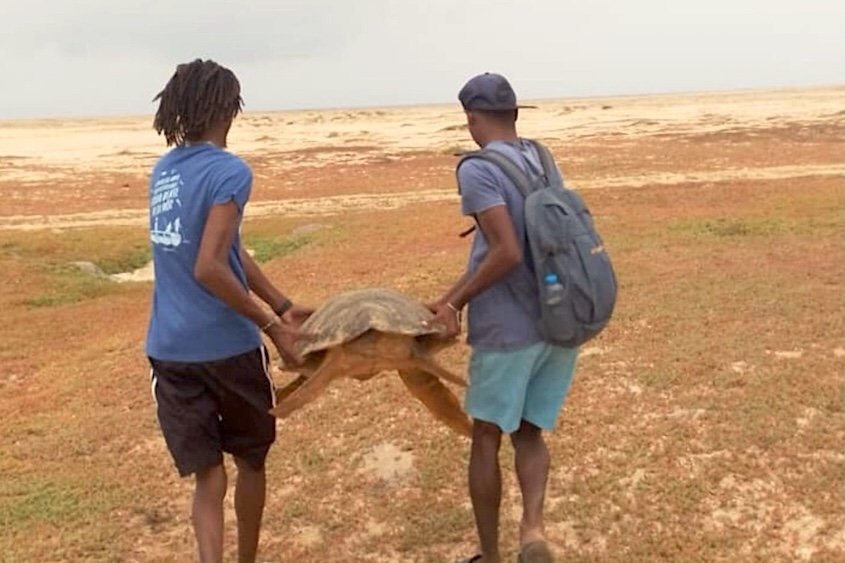
- The Turtle Programme. This aims to protect and monitor the nesting population in Maio, with the collaboration of the local population and groups of national and foreign volunteers.
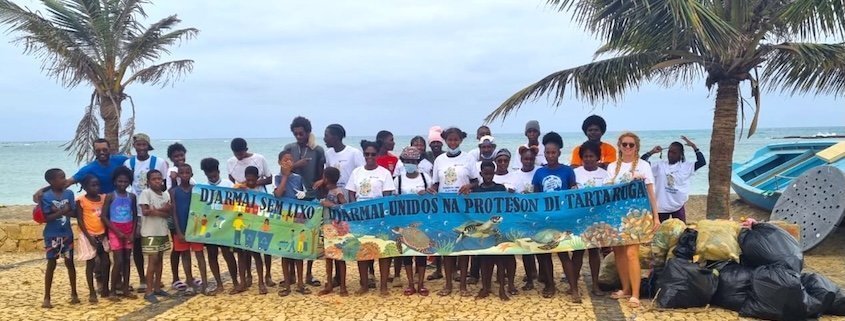
- Environmental Education and Sustainable Development Programme. This programme carries out education and outreach activities for young people and adults, promotes community empowerment and develops sustainable economic initiatives.
FMB played an important role in the classification of the island of Maio as a Biosphere Reserve, contributing key information on marine and terrestrial biodiversity. Over the years it has promoted initiatives that have been replicated on other Cape Verde islands and abroad. These include such initiatives as the “Guardians of the Sea”, which turned fishermen into conservationists, and “Homestay”. Homestay launched a tourism accommodation programme through local family homes.
Collaborative Scientific Studies
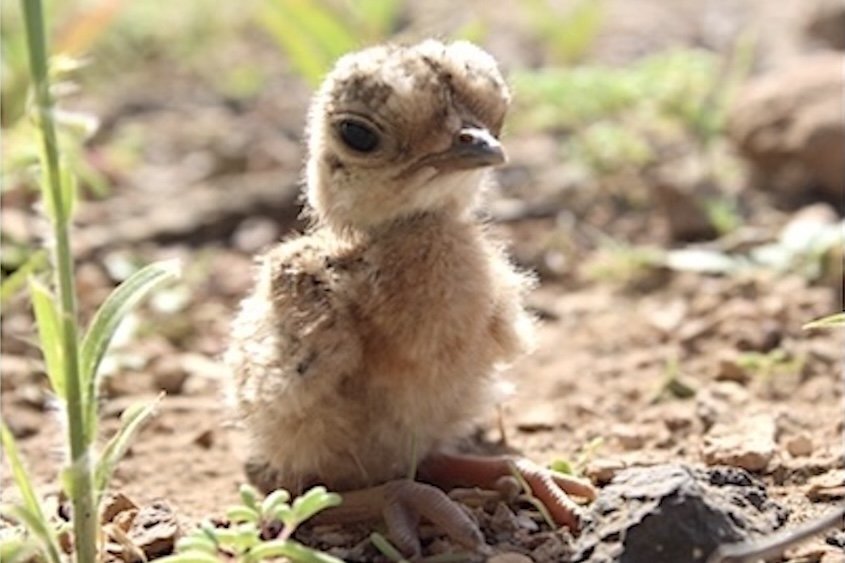
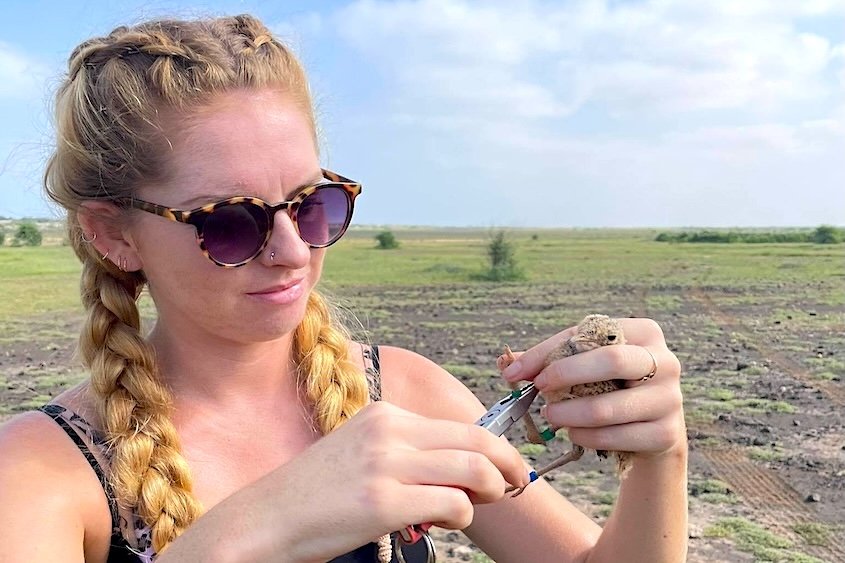
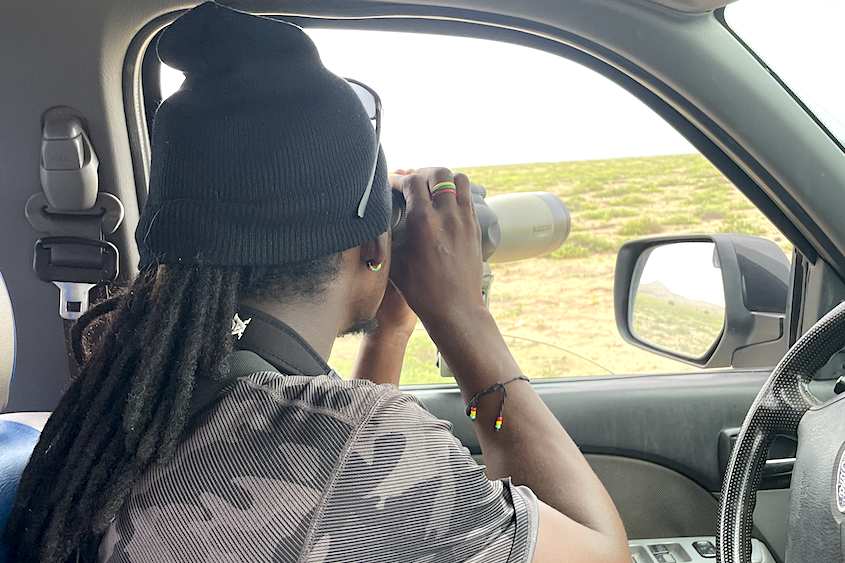
FMB also encourages strong collaborations with international educational institutions to conduct scientific research. Notably, FMB hosts a three-month shorebird monitoring program involving four universities. These are the University of Bath (UK), the University of Debrecen (Hungary), the University of Veterinary Medicine Budapest (Hungary), and the University of Veterinary Medicine Vienna (Austria). These teams, alongside local fieldworkers and leaders, monitor two resident shorebird species: the Kentish plover (Charadrius alexandrinus) and the Cream-colored courser (Cursorius cursor). Additi0nally, the monitoring extends to resident and migratory shorebird species in the Salinas do Porto Inglês, the island’s largest wetland and a designated RAMSAR site and protected area. This program exemplifies how international collaboration and local engagement can lead to impactful conservation outcomes.
Community Engagement and Eco-Tourism
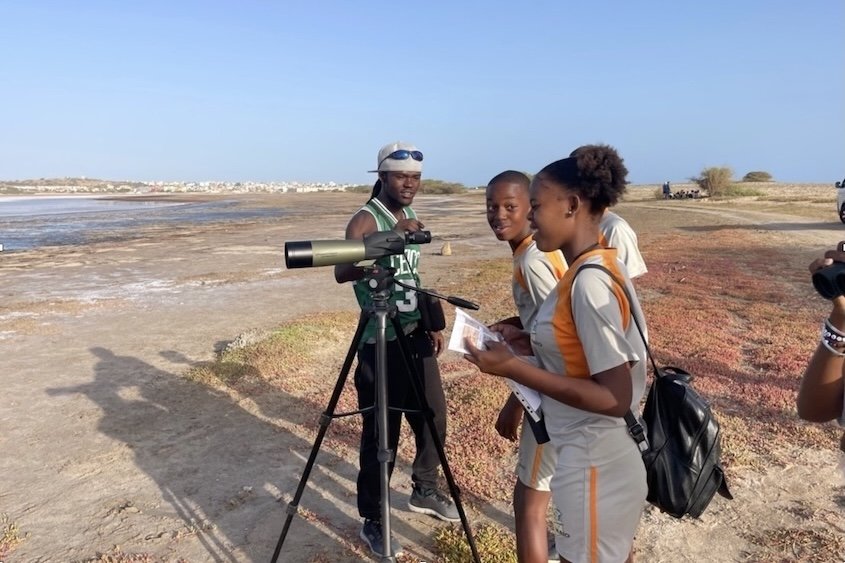
One of FMB’s most recent initiatives is focused on combating unemployment. This is done by supporting young local community members in the development of eco-tourism activities. FMB champions eco-tourism as a means to connect conservation with local livelihoods. Through guided tours with licensed eco-guides, turtle patrols, and birdwatching excursions, visitors can witness Maio’s rich biodiversity while contributing to sustainable development. These activities diversify the tourist experience in Maio, as well as improve the livelihoods of people in rural communities.
Education and Capacity Building
Education is at the heart of FMB’s mission. Therefore, the foundation runs workshops, school programs, and professional training sessions. These equip local communities and school children with the skills needed to manage natural resources sustainably. By integrating traditional knowledge with modern science, FMB inspires the next generation of conservationists.
A Vision for the Future
As one of Maio’s largest employers, FMB demonstrates how conservation can drive positive social and economic change. Under Janete Agues’ leadership, the foundation continues to grow as a model of community based conservation that can be adapted to other biodiversity-rich regions worldwide.
Whether you’re a traveller, a conservation enthusiast, or someone passionate about sustainable development, the Maio Biodiversity Foundation’s work is a powerful example of what can be achieved when communities and conservation align. In conclusion, to learn more, check out the FMB website.