There has been some good turtle news in Cape Verde. It is estimated that between May and September this year, more than 1000 turtles laid their eggs on the uninhabited island of Santa Luzia. That is more than was estimated in 2023. At the same time approximately 175 laid their eggs on the neighbouring island of São Vicente. Approximately 5,500 nests have been identified on Santa Luzia and 1,100 on São Vicente. The turtles and other marine creatures are looked after on these two island by Biosfera.
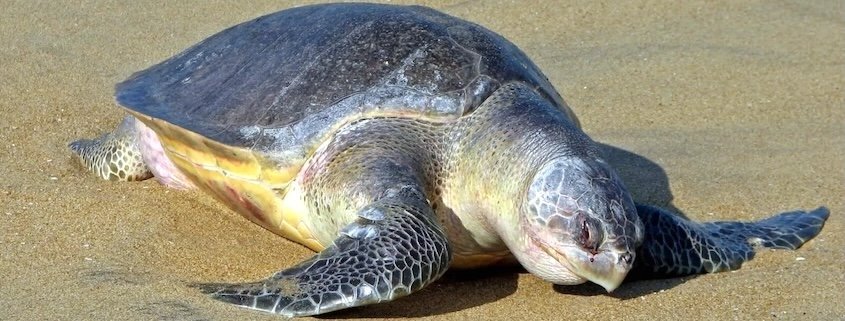
Meanwhile on the island of Maio an Olive Ridley turtle (also known as the Pacific ridley sea turtle) has spawned on the island for the first time. In June 2024 a female laid 131 eggs on a beach at Morro. This is one of the smaller turtle species, but they are known for the large number of eggs they lay. By comparison, a loggerhead female lays an average of only 80 per nest. This information was reported by Fundação Maio Biodiversidade (FMB). FMB suggest that this new discovery is one of the effects of climate change. As the oceans warm, many species have to adapt and maybe find new nesting areas.
The turtles do, however, face continuing hazards, both in the sea and on land. In the ocean they get caught in fishing nets. On land dogs are their enemy. The hunting and commercialisation of turtles was a problem, but in 2018 it was made illegal in Cape Verde. The other threat to turtles is the rise in global temperatures. As temperatures rise, more female turtles are hatched than males, which will eventually reduce the population.